
Expand Backlinks from Competitor Link Pages
By LincSpider Team · 2026-07-20 · 12 min

Most competitor backlink outreach advice stops at “export their referring domains and email everyone.” That dumps a thousand rows into a spreadsheet and calls it a strategy. Half the rows are directories, spam blogs, or pages where you’ll never get a reply. The useful half — niche blogs with open comment threads — gets buried.
This guide is narrower. Pull competitor referring pages, filter for blogs and comment-ready URLs, vet them, then expand with real comments (or a short email when there’s no form). We built LincSpider for the Chrome part of that loop. You can run the research with free tools first.
If you still need the broader “how do I find pages at all?” map, start with How to Find Blog Comment Backlink Opportunities. For why comments are marketing — not a ranking hack — see How to Build Backlinks with Blog Comments.
What Competitor Backlink Expansion Actually Means
Competitor backlink expansion means: sites that already linked to (or hosted comments about) a peer in your niche are candidates for your own participation. You’re not cloning their entire profile. You’re reverse-engineering where conversations already happen.
Ahrefs’ guide on finding competitors’ backlinks frames this correctly as a starting point for research. Their backlink gap write-up goes further with link intersect — domains that link to several rivals but not you. Both are research patterns. Neither tells you to paste the same comment on every URL in the export.
On r/seogrowth:
As a first step I would run a competitor backlink gap analysis using semrush or ahrefs
Fair first step. The second step — the one this article owns — is filtering and expanding without turning into a bot.
Pull Referring Pages Without Burning Budget
You do not need a paid suite on day one.
Free path: Bing Webmaster Tools
Go to Bing Webmaster Tools… Add a competitor domain. You'll see referring domains
Workflow in plain English:
- Verify your own site in Bing Webmaster Tools (you should anyway).
- Use competitor / SEO research features Bing exposes for domains you care about (UI labels change; the idea is “see who links to them”).
- Export or copy referring URLs into a sheet.
- Tag each row: directory, news, forum, blog post, unknown.
Coverage won’t match Ahrefs’ crawl. For a solo operator building a weekly comment queue, “good enough seeds” beats “perfect database you never open.”
Optional: Ahrefs, Semrush, and similar suites
If you already pay for a suite, use it. Referring pages reports, link intersect, and DR/traffic filters save hours. Ahrefs documents how to pull backlinks and spot organic competitors. Treat those exports as inputs to your filter, not as a send list.
Same thread that praises Bing also says:
The process matters more than the tool.
That’s the thesis here.
Pick three to five real competitors
Not “everyone in SEO Twitter.” Pick domains that rank for the same buyer keywords, publish in your language, and get links from places you’d actually want to show up. Too many competitors = noisy sheet. Too few = thin queue.
Filter for Blogs and Comment-Ready Pages
Raw referring-page exports mix:
- Homepage footer links
- Resource directories
- Press mentions
- Guest posts
- Blog posts with comment forms
- Comment spam farms
For comment expansion, keep rows that look like articles:
| Keep signals | Drop signals |
|---|---|
/blog/, /article/, date in URL | Pure homepage, /tag/, thin directories |
| Visible “Leave a reply” / comment form | Comments closed, login wall only |
| Recent publish or recent replies | 2014 post, zero replies, 200 spam |
| Niche overlap with your product | Random DA-chasing unrelated blogs |
You’re allowed to keep a few editorial targets for later outreach. Park them in a separate column. Don’t pretend a closed-comment news site is a comment opportunity.
Cross-check with the operator and vet habits in our find opportunities guide — competitor seeds and Google footprints feed the same queue.
Sheet columns that keep you honest
| Column | Example | Why |
|---|---|---|
| referring_url | https://example.com/blog/invoicing-tips | Source of truth |
| competitor_seed | competitor-a.com | Trace which export paid off |
| type | blog_comment / email / skip | Forces a decision |
| vet_notes | author replies; niche fit | Future-you will forget |
| status | queued / submitted / approved | Weekly review |
If a column stays empty for a month, delete it. Tracking theater is another form of tool waste — the same disease paid suites get blamed for when the real issue is unused features.
When two competitors share the same referring blog, mark it once. Duplicate outreach to the same editor is how you earn a spam label, not a second link.
Expand One Level Deeper (Without Building a Link Wheel)
After you have a clean list of referring blogs, treat the hosts as a second research layer:
- Export referring domains for 3–5 peer sites that grew recently (not only decade-old incumbents — newer winners often show active acquisition patterns).
- Keep URLs that appear across multiple peer exports. Shared hosts are usually easier to publish on and more likely to get crawled than one-off spam blogs.
- Optionally open those hosts and note their active partners — a second hop for discovery, not a scheme to trade links in a closed loop.
Treat “appears on several growing peers” as a priority signal, not a guarantee. You still open the page and vet.
Channel Taxonomy Before You Act
For each keeper URL, label the channel before you draft anything:
| Channel | Typical move | Skip if… |
|---|---|---|
| Blog comment | Contextual comment + website field | Thread is a link farm |
| Updated roundup / “best tools” post | Short email to the author asking for a relevant slot | Article has not been touched in years |
| Guest / contributor | Pitch only if guidelines exist | Pay-to-publish with junk outbound |
| Community share (HN-style) | Participate first; share later | Brand-new account dumping a link |
| Self-serve publish platforms | Test one post for dofollow + indexing | Captcha farms or auto-approve spam |
Free backlink checkers that show ~20 sample links are enough to learn channel types. Full active exports from Bing or a suite are what you use for a real weekly queue.
Vet Before You Expand
Filtering by URL pattern isn’t enough. Open the page.
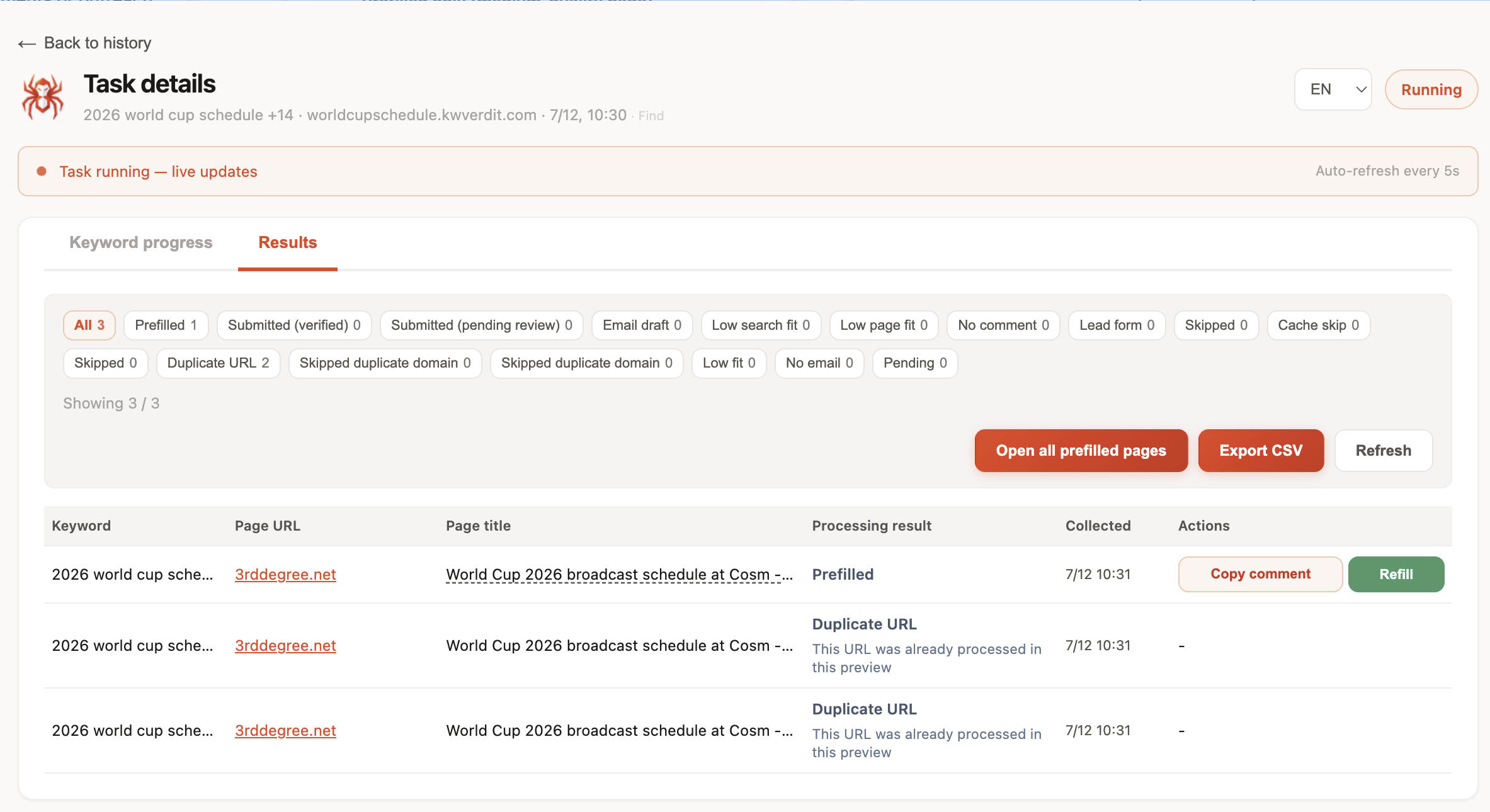
Five-minute vet (aligned with Gatilab’s practical checks and Digital Point veterans):
- Spam density — Digital Point warns against auto-approval blogs stuffed with junk. If every comment is “Nice post!!!” with a keyword name, leave.
- Author engagement — does the author reply sometimes?
- Recency — month-ish updates or an active thread beats a dead archive.
- Relevance — would a reader of this post care about what you build?
- Form reality — can a human submit without buying a captcha farm?
WebmasterWorld still sounds right:
I'd be leery of seeding blogs simply for links
Vetting is how you avoid that.
On r/SEO:
No tool can build link for you. Even if it does, it would be a spam with no SEO value.
Competitor expansion fails the same way if you auto-post on every referring URL.
A worked mini-example
Say Competitor A ranks for “invoice reminders for freelancers.” Your Bing or suite export shows 180 referring pages. After URL filters you keep 34 blog posts. After five-minute vets you keep 11. Of those, seven have open forms; four are closed and go to an email column.
You don’t need 180 actions. You need eleven honest ones. That math is the whole point of expansion-as-filter, not expansion-as-spray.
Expand: Comment First, Outreach When Needed
For pages that pass vet:
- Read the post. Skimming the H2s isn’t reading.
- Draft a contextual comment — specific claim, short experience, optional question. Put the URL in the website field when it exists (Moz’s comment marketing notes).
- Submit yourself. No bot.
Comment shape that usually survives moderation (adapt, don’t paste):
- One sentence that proves you read this article (quote a number or section).
- One sentence of your experience or a careful disagreement.
- One optional question the author might want to answer.
- Website field for the URL; body stays clean unless the thread invites resources.
Warrior Forum still pushes niche fit and real names. Keyword usernames are a fast reject.
Honest outcome framing from r/Blogging:
Comment backlinks are mostly nofollow these days so the direct SEO value is minimal. But I still think there's value in it — just not for the reasons most beginners expect.
Search Engine Journal is harsher on pure ranking intent. Google marks user comments with rel="ugc". Plan for referral traffic and relationships (WebmasterWorld on referrals), not PageRank theater.
If there’s no comment box, don’t force a comment plugin fantasy. Switch to a short, personalized email — same habit Indie Hackers founders describe: warm up, then ask (warm-up framework). On Reddit:
Personalize outreach messages to avoid marked as spam.
(thread)
Email when the ask is editorial: “you linked three tools in this roundup; here’s a free data point that updates section 2.” Don’t email “please add my homepage” to every referring domain.
Common Failure Modes (Skip These)
| Failure | What it looks like | Fix |
|---|---|---|
| Profile cloning | Same 50 directories every competitor used | Filter for blogs/comments only |
| Anchor spam | Keyword name + body URL dump | Real name + website field |
| Stale seeds | Commenting on 2017 posts with closed forms | Recency gate in vet |
| Tool worship | Waiting to “buy Ahrefs first” | Start with Bing + Sheet |
| Volume theater | 40 identical comments/week | Cap at quality you can read |
r/bigseo is blunt about click-through motives. If even you wouldn’t click your comment, nobody else will.
Turn a Filtered List into a Weekly Queue
A workable cadence for one person:
| Day | Action |
|---|---|
| Mon | Pull/refresh 1–2 competitor exports; filter 20–40 URLs |
| Tue | Vet down to 8–12 comment-ready pages |
| Wed–Thu | Write and submit 3–5 contextual comments |
| Fri | Log outcomes; email 1–2 no-form targets |
Track in Sheets: URL, competitor seed, pass/fail vet, date submitted, approved?, notes. r/bigseo people still argue about prospect tools — a simple sheet beats memory.
Rotate competitors monthly so you’re not camping on one brand’s leftovers. When a referring blog becomes a relationship (author replies, shares your note), promote that domain to a “warm” list and stop treating it like a cold seed.
Indie Hackers frames the long game: build familiarity with 50–100 people in your niche via meaningful comments before you lean on cold asks.
Pair this cadence with operator-based discovery from the find opportunities guide when competitor exports run dry. Seeds are inputs. Judgment is the product.
Where LincSpider Fits After You Have Seeds
Research tools find who links. LincSpider helps you work the page in Chrome: discover related suggestions, review a shortlist, draft, prefill — you approve every step.
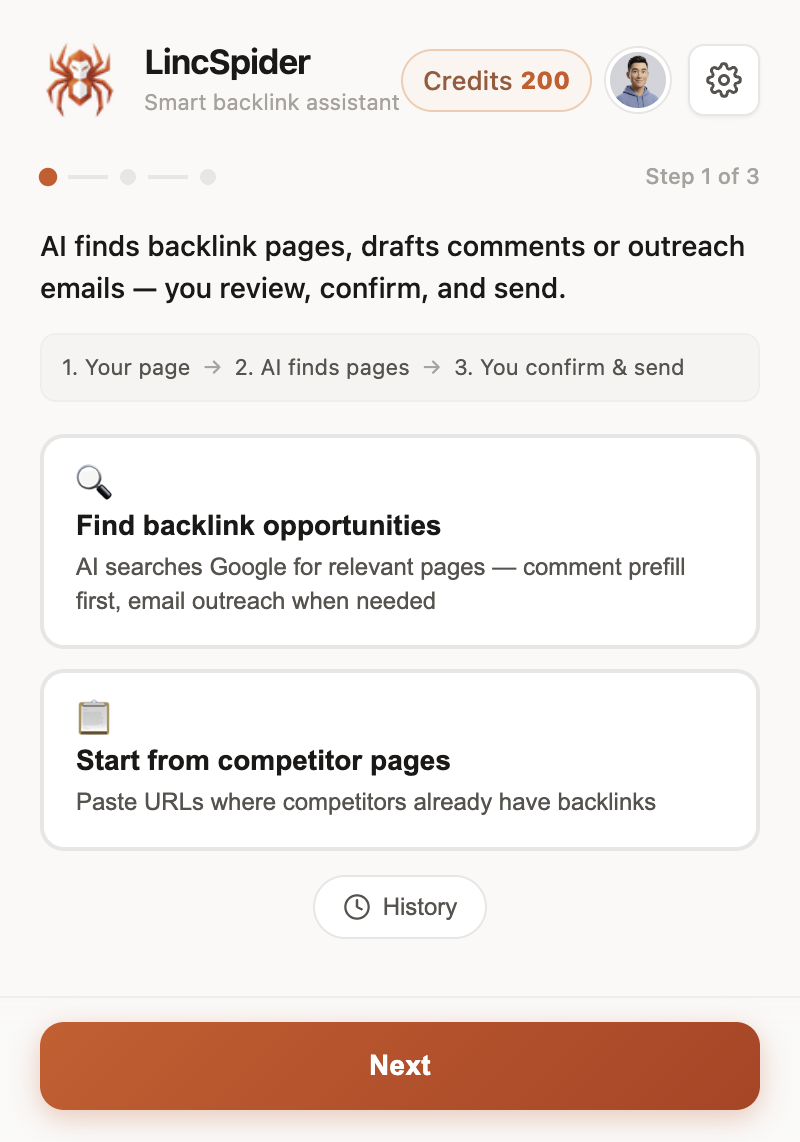
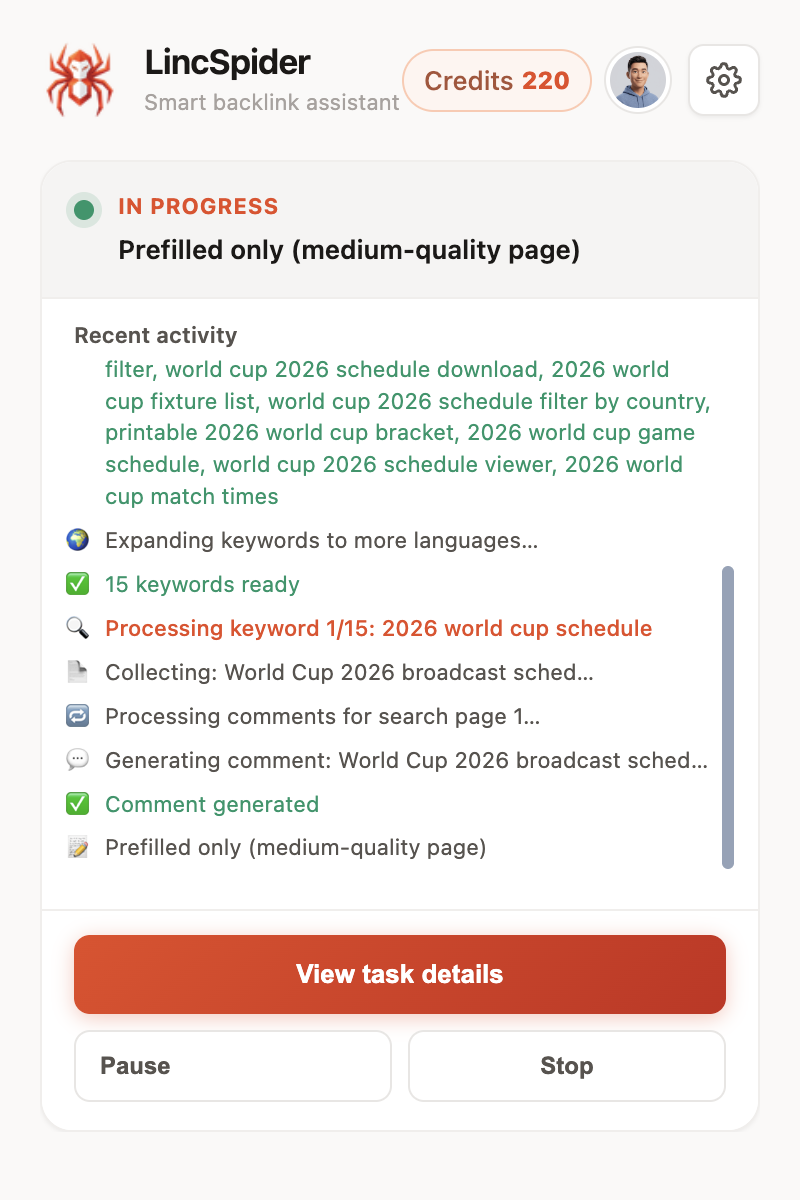
Hacker News discussion of similar Chrome helpers mentions importing competitor backlink exports into an extension. Same pattern: suite or Bing for seeds, browser for execution.
Preview drafts free from /en/download. More tactical posts live on /en/blog.
FAQ
What is competitor backlink expansion?
Using referring pages (and domains) that already connect to your competitors as a seed list for your own outreach or comment marketing — after filtering and vetting.
Can I do competitor backlink outreach without Ahrefs?
Yes. Bing Webmaster Tools plus manual filtering works for small queues. Suites help at scale; they’re optional, not moral requirements.
How do I filter competitor links for blog comments?
Prefer article URLs with open forms, niche fit, and human discussion. Drop directories, spam pits, and closed threads. See the table above and the find opportunities vet checklist.
Should I email every referring domain?
No. Most aren’t emailable editors waiting for your pitch. Comment where forms exist and fit; email when you’ve got a specific, useful ask.
Is copying competitor backlinks spam?
Blindly mirroring their profile is. Reading a page and adding a real comment (or a personalized note) is normal marketing. r/SEO keeps repeating: relationships over spammy shortcuts.
How many competitor domains should I analyze?
Three to five close competitors is enough to fill weeks of work. Add more only when your queue runs dry.
Where does LincSpider fit?
After you have seeds: Chrome discovery, review, draft, and prefill with human approval — not auto-submit. Start at /en/download.
Wrapping up
Competitor referring pages are a map, not a mandate. Pull them cheaply, filter for blogs and comments, vet like a moderator would, then expand with work you’d put your real name on. That loop pairs cleanly with finding opportunities and the parent comment marketing guide. When you’re ready to run it in the browser, grab LincSpider.