
Contextual Blog Comments vs Generic Pitches
By LincSpider Team · 2026-07-16 · 9 min
"Add value." Every blog commenting guide says it. Almost none show you the difference between a contextual blog comment and a generic pitch that gets trashed in moderation.
We see both sides running LincSpider: drafts that reference a specific paragraph — and drafts that read like someone never opened the tab. The second kind wastes credits and reputation.
This article is the writing layer for our blog comment link building cluster. Pair it with prefilling comment forms once the words are worth posting.
What "Contextual" Means for Blog Comments
A contextual comment proves you read this post — not just the niche.
It names a claim, number, or example from the article and responds to it. Add a short story from your work, a respectful disagreement, or a question you'd actually want the author to answer.
The link removal test (popularized in Link Building Journal's 2026 Reddit piece): if deleting your URL makes the comment pointless, it's a pitch. If the comment still helps the thread, you're contributing.
That test works on blogs too, not just Reddit.
Don't confuse this with contextual backlinks in the SEO sense. On r/localseo, people use "contextual" to mean links inside article body copy — not sidebars, footers, or comment fields. Comment links are almost always nofollow / ugc (Google's docs). Contextual comments buy you visibility and relationships, not PageRank juice.
Generic Pitches vs Comments That Get Approved
| Generic pitch | Contextual comment |
|---|---|
| "Great post!" | References one specific section |
| Link is the whole point | Link is optional; insight is the point |
| Could be pasted on any blog in the niche | Could only fit this thread |
| Keyword username | Real name or brand |
| Posted without reading | Posted after reading + light edit |
Link Building Journal describes the deleted pattern in spirit: a sentence of agreement, then "I wrote a guide, check it out [link]." AutoMod — or a human — kills it fast.
On r/Blogging:
Comments must be relevant, informative, and add value to the discussion.
r/SEO adds the length warning:
Avoid commenting in 1 or 2 sentences with a link… Make sure your comments provide added [value].
Three sentences of real substance beat ten lines of praise.
Worked example (fictional but typical):
Generic: "Great insights on email outreach! We built a tool that helps with backlinks too — check our site."
Contextual: "Your point about replying to comments before cold email — we tried that for six weeks and reply rate went from 4% to 11%, but only on posts where we'd left a comment the author replied to. On drive-by comments, nothing moved. Curious if you track author reply as a filter?"
The second version names a tactic from the article, adds a number, admits limits, and asks a real question. The link in the website field is optional garnish.
Warrior Forum's old Do/Don't list still matches what moderators want: read first, no ad dumps, no affiliate links in the body when the website field exists.
Digital Point on reputation:
I get more visits from commenting than Google search.
That outcome tracks with contextual work — not with fifty identical "Nice post" entries.
Contextual Backlinks in Body Text vs Comment Fields
SEO Twitter fights about "contextual backlinks" aren't about comments. They're about editorial links in paragraphs — the kind guest posts and digital PR chase.
Comments live in a weaker slot. Search Engine Journal lists pure comment link building among tactics that don't move rankings.
So why bother with contextual comments at all?
Moz's comment marketing framework gives the honest upside: a remarkably good comment can push the author to edit the post and add your link in the body — the contextual backlink you actually wanted.
Their Post-Penguin case study is the classic example: one thoughtful comment turned into a full blog post quoting the commenter, with a followed link.
That's rare. It's also impossible if your comment was "Nice article!"
On r/bigseo:
There is no SEO benefit to comment linking, those links are all no-follow. They do it just to get click-throughs in case anyone is reading.
Contextual writing helps those click-throughs happen — because someone might actually read comment #4 if it's not garbage.
How to Write Context Without Sounding Like a Template
AI drafts help. They also love filler: "In today's digital landscape…" Kill that.
Pattern we use before prefilling:
- Quote or paraphrase one line from the post — "You wrote that moderated comments beat open spam sections…"
- Add one concrete beat — a metric, a failure, a tool you tried, a constraint ("We hit this on a 3-person team, not an agency budget").
- Optional question — only if you'd reply if the author answered.
- URL last — in the website field, not a hard sell in paragraph three (We Are Tenet on Reddit-style answers: lead with the answer, link optional at the end).
On r/SEO:
If you comment on a blog post and put a URL in an attempt to get a backlink — then, no.
Contextual participation can include a URL in the profile field. Context-free link drops can't.
If an AI draft doesn't mention anything from the page title or H2s, don't post it. r/SEO on tools is clear: automation without judgment is spam.
Quick edit checklist before prefill:
- At least one phrase only makes sense on this URL
- No "In today's fast-paced world" / "game-changer" filler
- Display name is a person or brand, not a keyword string (Digital Point on names)
- Passes link removal test
- You would sign it with your real reputation
On r/SEO, the advice for new builders is relationship-first:
Avoid buying links or spammy tactics… create, share, build relationships. Slow but solid.
Contextual comments are slow. Generic pitches only look fast until moderators delete them.
Review the Page Before You Draft
Writing context on the wrong page wastes everyone's time. Five-minute vetting (Gatilab on comment vetting):
- Comments open and not a graveyard of "Nice post!!!" spam
- Post is in your niche — not a random DA hunt
- Author or readers replied recently
- You can name one thing you'd respond to
In LincSpider, the review step happens before credits burn on a full draft:
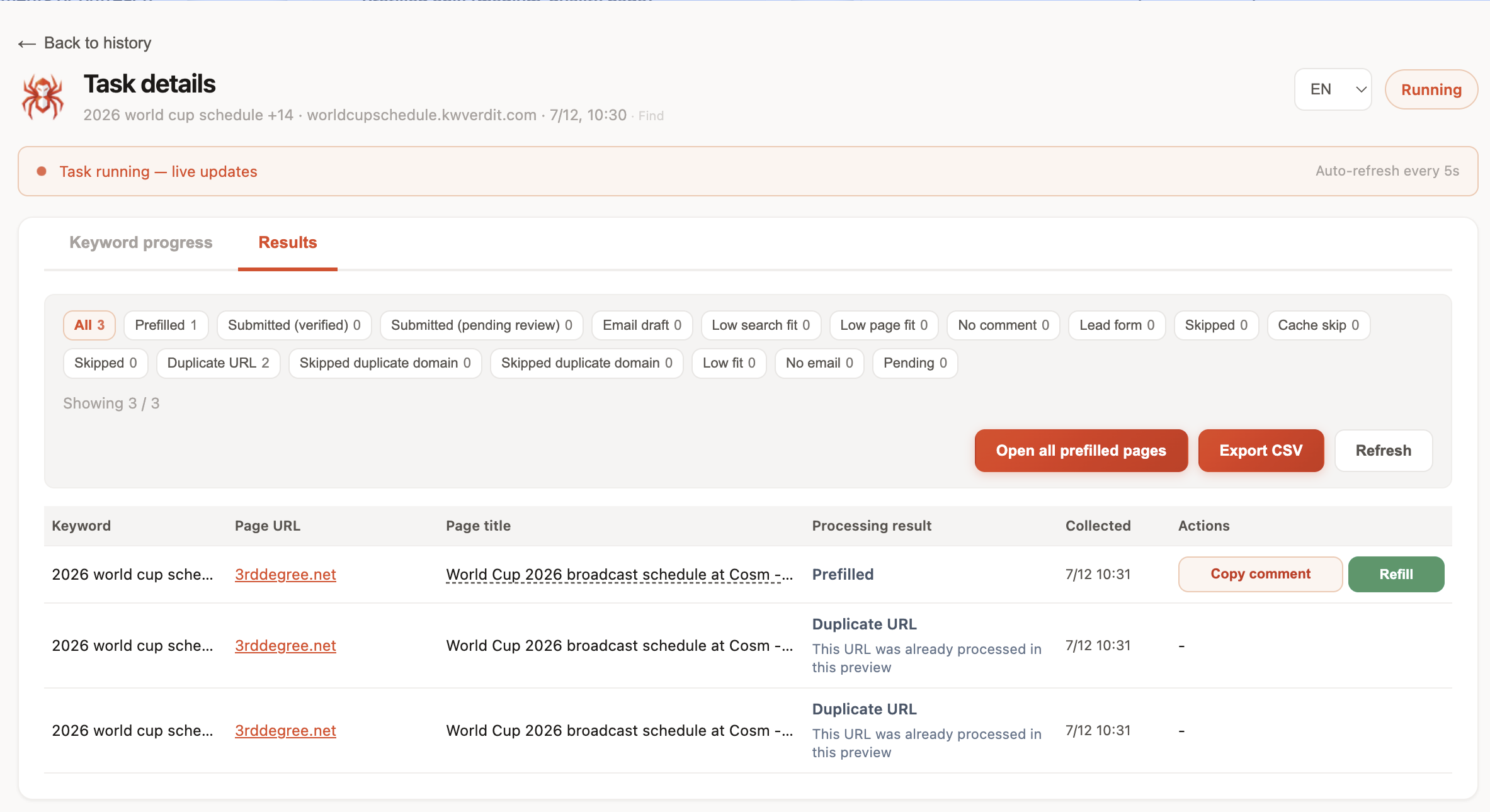
Skip early. Context is expensive; don't spend it on pages you'd never read.
Digital Point puts it plainly: blog commenting was abused to drop anchor text. The fix is to improve the post with ideas — which you can't do if you didn't read it.
Contextual Drafts in Chrome (Human-in-the-Loop)
Our workflow mirrors what Indie Hackers founders recommend: meaningful comments on specific articles before cold outreach — not mail-merge pitches.
- Discover pages from your URL or competitor links (cluster guide).
- Review title, domain, comment availability — skip junk.
- Draft from visible page text; edit until it passes the link removal test.
- Prefill the form; you submit (prefill guide).
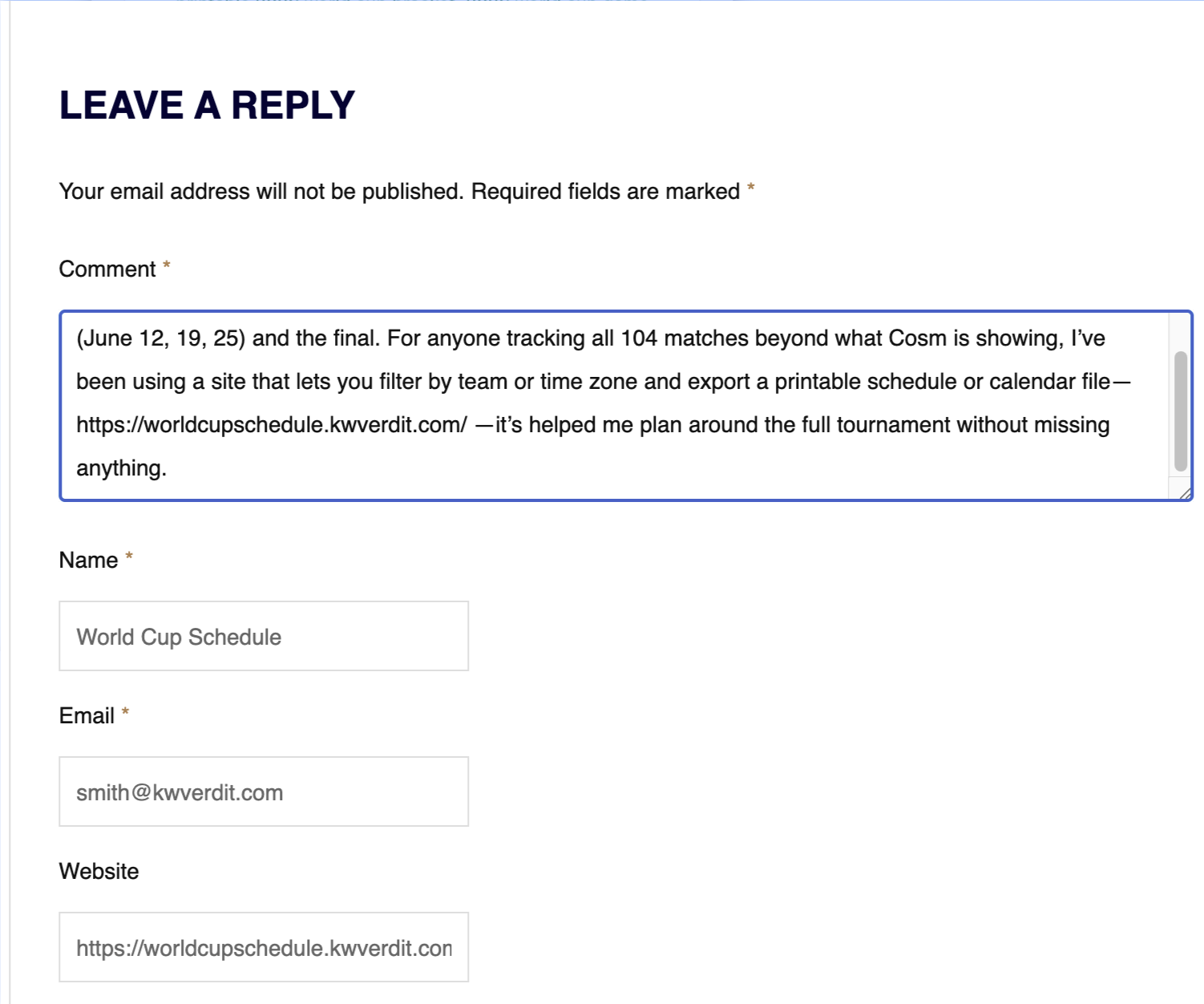
LincSpider does not auto-post. Indie Hackers on outreach automation: automation for timing, human for message.
Preview 3 drafts free or see pricing for higher volume.
What Contextual Comments Actually Deliver
Set expectations like adults:
Sometimes you get:
- Referral clicks when the thread has traffic (WebmasterWorld veterans still quote "top referrers were blogs I commented on")
- A blogger who remembers your name next month
- A rare editorial link when your comment sparks a follow-up post (Moz case study)
Often you get:
- Nothing measurable — and that's normal at 3–10 comments/week (Backlink Helper on safe volume)
You don't get:
On r/Blogging:
Comment backlinks are mostly nofollow these days so the direct SEO value is minimal. But I still think there's value in it — just not for the reasons most beginners expect.
Contextual writing aligns with those "other reasons" — traffic, trust, relationships — not fantasy DA.
Track lightly if you must: UTM on the website field, a spreadsheet column for "author replied Y/N," referral traffic in analytics for domains you commented on. Digital Point practitioners have reported comment-driven visits beating search on small sites — but that's anecdotal, not a guarantee.
What we wouldn't track: dofollow status of comment links. Hunting dofollow comment blogs pushes you toward spam footprints (Warrior Forum on dofollow hunts). Context is the filter; juice hunting is the trap.
FAQ
What is a contextual blog comment?
A comment that responds to a specific point in the post, adds original insight, and would still be useful if your link were removed.
How is a contextual comment different from a generic pitch?
Generic pitches use template praise plus a link. Contextual comments reference the article and pass the link removal test (Link Building Journal).
Do contextual comments pass SEO value?
Rarely through the comment URL itself (nofollow/ugc). Value is mostly referral traffic, brand, and occasional editorial links sparked by great comments (Moz).
Can AI write contextual comments for me?
AI can draft from page text. You must edit for accuracy, tone, and specificity — or you recreate generic spam (r/SEO tools thread).
What is the "link removal test"?
Delete your URL mentally. If the comment becomes pointless, it's a pitch. If it still helps, post it.
How many contextual comments should I leave per week?
Forum consensus: 3–10 quality comments per week, not daily blasts (Backlink Helper, Digital Point).
Should I put my URL in the comment body or website field?
Website field. Keep the body about the discussion (Moz comment marketing, Warrior Forum tips).
Wrapping up
Contextual blog comments aren't longer generic pitches. They're proof you read the thread and had something worth saying.
Generic copy is faster to produce — especially with AI — and faster to ignore. Context takes minutes per post. That's the cost of not looking like spam.
Read the cluster in order if you're building from zero: backlinks with blog comments (strategy) → this article (writing) → prefill forms (mechanics). Strategy without context is spam; context without prefill is just slow.
If you want page-aware drafts, a review step, and prefill without auto-posting, try LincSpider. Browse more guides on /en/blog.
Sources: Reddit, Digital Point, Warrior Forum, WebmasterWorld, Indie Hackers, Moz, Search Engine Journal, Link Building Journal, Google Search Central, We Are Tenet.